Good maintenance work order software makes a shop floor legible from the doorway. It opens the job with the agreed scope and the part history already attached. Then every task underneath carries its own state and its own signature. So nobody walks the bays asking where a wheel is.
Not a facility CMMS: what a Part 145 work order must do
Search for maintenance work order software and the first page is facility tools: computerized maintenance management systems (CMMS). A Part 145 component shop needs something narrower and stricter. Its work order ends in a certificate of release to service (CRS). Every task on it is evidence.
Point 145.A.65(b)(1) of Regulation (EU) No 1321/2014 requires an organization’s procedures to ensure “a clear maintenance work order or contract” with the customer. That order sets out the maintenance to carry out, so the component can go out under point 145.A.50. On the FAA side, 14 CFR 145.211 requires a quality control system. Its manual holds “a sample of the inspection and maintenance forms”, or points to a separate forms manual. AirOne follows that sequence. It will not plan your compressor service.
The job card opens with what receiving already found
Receiving and preliminary inspection both happen before the work order exists. So the scope answers real findings, not a guess. The customer record, the serial number and the confirmed fault carry forward. The serial history sits one click away.
Once a job is open, AirOne reads the calibration register at task level. A lapsed torque wrench therefore blocks the sign-off, instead of surfacing in an audit months later. 14 CFR 145.109(b) puts calibration of test and inspection equipment on the repair station.
Maintenance work order software that signs off at task level
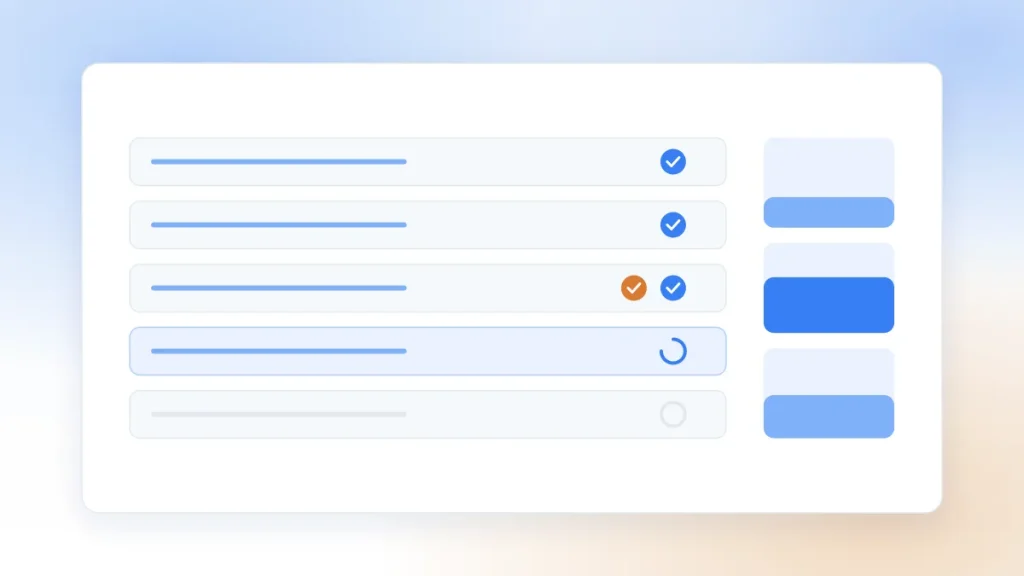
The engineer who does a task signs that task. Not the job, the task. Because the signature lands at task level, the record shows who did what, and in which order. A job card is the list of those signed tasks, and a task card is one line of it.
Point 145.A.55(a)(1) requires an organization to “record the details of the maintenance work” it performs. It must also keep the records behind each CRS. 14 CFR 145.219 wants records in English, in a format the FAA accepts. A task-level sign-off holds that evidence without anyone writing it twice. Part 145 record-keeping for component shops sets the EASA and FAA retention rules side by side.
Inspection stages and dual-inspection points on the job card
Inspection stages sit in the sequence where they belong. A dual-inspection point demands a second name before the task closes. One person cannot both do and check a critical step. Good maintenance work order software refuses to advance the job until both signatures exist. In a wheel shop, for example, a typical dual point sits on bearing installation or on the inflation check.
Point 145.A.65(a) asks for procedures that take human factors and good maintenance practices into account. A dual point that the job card itself enforces is the plainest version of that requirement.
A live bay view inside the maintenance work order software
The bay view shows every open job and the stage it has reached. Planners quote a turnaround time (TAT) they can meet, because they can see what is waiting on inspection.
This is the shop floor control software layer a spreadsheet never becomes. Point 145.A.47(a) asks for a planning system “appropriate to the amount and complexity of work”, and 145.A.47(c) asks for a proper handover at a shift change. A bay view that shows the exact task a job stopped on is most of that handover, already written down.
Turn time reporting reads the same work orders the floor works from, so nobody enters the hours twice. Once the last task closes, the job hands its record to the EASA Form 1 and FAA 8130-3 release. Work order management software that stops short of the release is only half of the shop.
What the maintenance work order software enforces on the job card
A work order moves through four states: received, in work, sent and completed. It carries its type, its client, its aircraft and the work performed, which is one of repaired, overhauled, inspected and tested, modified, restored or scrapped. Its checklist is a snapshot of a template tied to that assembly’s part number and that work order type. So the CMM reference and the task card travel with the job instead of with a folder.
The rules underneath are the point. Items close in sequence. An item flagged for independent inspection needs a second person, and a cool-down sits between the first signature and the inspection, so nobody signs twice in a row. A wheel past five tyre changes, or past 1,500 cycles, cannot be booked as anything lighter than a major overhaul; the server refuses it. Parts reach the job through a picking slip or a manual issue, and both write to the serial history.
Maintenance work order software from a working shop
AirOne MRO is developed inside a working EASA Part 145 wheel and brake shop. The job flow above is that shop’s flow, and the workflow on How it works shows the whole sequence. What we learned the hard way: a job-level signature tells an auditor nothing about the third task.
Frequently asked questions
Does Part 145 require a work order for every job?
Yes, in effect. Point 145.A.65(b)(1) of Regulation (EU) No 1321/2014 requires an organization’s procedures to ensure “a clear maintenance work order or contract”. That order establishes the maintenance to be carried out. 14 CFR 145.211 requires a quality control system, and 145.219 requires records that demonstrate compliance with part 43.
What should a task-level sign-off record?
At minimum, the task, the person, the date and the result. Point 145.A.55(a)(1) requires an organization to “record the details of the maintenance work” it performs. In practice that means the maintenance data revision used, the tools and their calibration status, the parts issued against the task, and the inspection stage it passed.
How long must a shop keep its work order records?
EASA sets 3 years. Point 145.A.55(a)(3) counts them from the date of the component’s certificate of release to service. 14 CFR 145.219(c) sets at least 2 years from the date of approval for return to service. Both clocks start at release, so the safest habit is to keep everything for the longer period.
Is maintenance work order software the same as a CMMS?
No. A computerized maintenance management system (CMMS) schedules preventive maintenance on a facility’s own assets: chillers, forklifts, doors. A Part 145 shop’s work order is customer maintenance on an aircraft component, and it ends in a certificate of release to service. MRO software: what a component shop actually needs draws that line.
Founding Shops
The first ten Founding Shops get their first six months free.
In exchange for honest feedback: what your shop actually needs, and what we got wrong.